 Skip to content

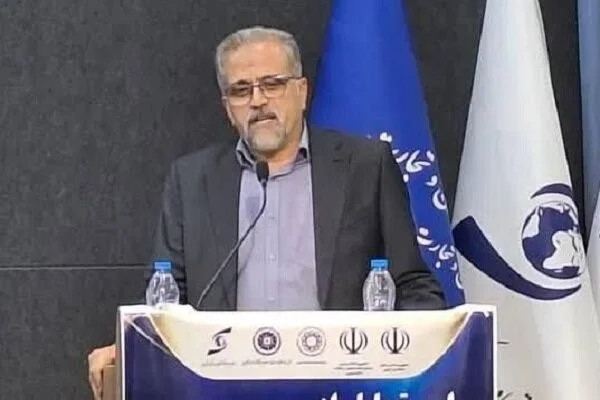
Qazvin – The Director General of the Office of Enterprises and Associations at the Trade Promotion Organization of Iran stated that developing alternative transport routes, facilitating the repatriation of foreign exchange earnings, and removing trade barriers can help improve the country's exports.
According to a Mehr News Agency reporter, Farhad Nouri, speaking on Saturday afternoon at a ceremony honoring exemplary exporters in Qazvin Province, highlighted the province's potential in foreign trade. He stated that Qazvin possesses suitable infrastructure, export terminals, and commercial access, and that its exporters have consistently played an effective role in enhancing the country's standing in the realm of trade.
Noting that export development is no longer limited merely to marketing, he added that under current circumstances, establishing suitable logistical routes for the transport of goods and facilitating the repatriation of export earnings are of great importance; furthermore, the capacity of economic diplomacy should be leveraged to expand trade routes and remove obstacles facing exporters.
Currency and Logistical Issues: The Main Challenge for Exporters
The Director General of the Office of Enterprises and Associations at the Trade Promotion Organization of Iran identified foreign exchange issues as a primary concern for economic operators. He stated that some of the existing challenges stem from foreign exchange commitments made in previous years and the deadlines set for fulfilling them—deadlines that, in certain instances, did not align with the operational realities of the businesses involved.
Referring to the provision allowing the use of export earnings for the import of goods this year, Nouri stated: "The repatriation of export proceeds through imports can facilitate the circulation of resources within the economy; it is essential to strike a balance between the country’s foreign exchange requirements and the actual needs of producers and exporters."
Emphasizing the necessity of managing the country’s foreign exchange resources, he added that export earnings hold a significant place within the nation’s economic framework of resources and expenditures and should be utilized to meet economic needs and develop industrial infrastructure. At the same time, however, the implementation of regulations must be managed in such a way that the operations of export-oriented enterprises do not face serious disruption.
Decline in trade despite the use of alternative routes
Pointing to the wartime conditions and the challenges facing the country's foreign trade, this official stated that, given that over 70 percent of the nation's trade was previously conducted via sea routes, efforts were made during the first six months of this year to maintain the flow of trade by utilizing alternative routes.
Nouri added that, despite these measures, statistics for the first half of the year indicate a 23% decline in the value and a 35% drop in the weight of trade—a situation that underscores the need to strengthen transport routes, remove obstacles, and provide more effective support to economic actors.
Noting that the decline in certain target markets has been partially offset by the development of new trade routes, he emphasized the need to improve foreign trade conditions—by refining processes and expanding alternative routes—to prevent further harm to the operations of export-oriented enterprises.
The Trade Promotion Organization is prepared to follow up on the problems faced by exporters.
The Director General of the Office of Enterprises and Associations at the Trade Promotion Organization of Iran identified export enterprises as key advisors to the organization in identifying economic obstacles, stating that the experience and insights of exporters can contribute to refining processes and making more effective decisions.
He continued: The Trade Promotion Organization has established a platform for receiving and following up on the foreign exchange and transportation-related challenges faced by economic operators; the issues raised are addressed through specialized working groups and by being referred to the relevant decision-making authorities.
Nouri requested that exporters submit their issues and demands, accompanied by precise information and documentation, to facilitate the identification of obstacles and enable more effective follow-up.
In conclusion, while expressing appreciation for the efforts of exporters in Qazvin Province, he noted that the Trade Promotion Organization of Iran stands ready to follow up on the issues faced by economic operators and to take steps—in coordination with the relevant authorities—to facilitate business activities and remove export barriers.