 Skip to content
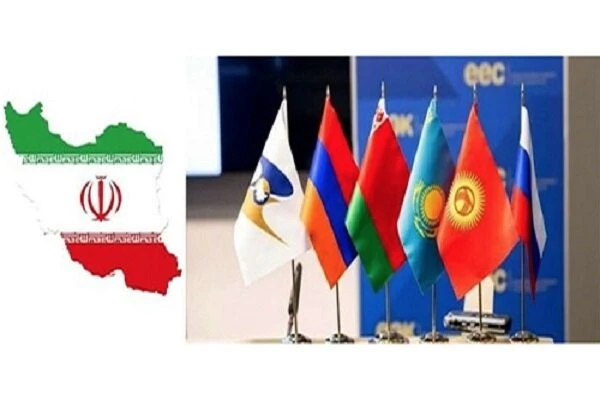
The head of the Trade Agreements Office at the Trade Promotion Organization stated that Iran's trade with Eurasian Economic Union countries grew by approximately 22 percent last year.
According to a Mehr News Agency reporter, Elham Haji-Karimi, Head of the Trade Agreements Office at the Trade Promotion Organization of Iran, stated today at a meeting marking the first anniversary of the implementation of the free trade agreement between Iran and the Eurasian Economic Union (EAEU): "This meeting is significant as it coincides with the tenth anniversary of the commencement of cooperation between the Islamic Republic of Iran and the Eurasian Economic Union, as well as the first anniversary of the implementation of the free trade agreement between the two sides. It provides an opportunity to evaluate economic cooperation between Iran and the member states of the Eurasian Economic Union, while reviewing achievements, challenges, and future prospects."
He added: Fortunately, constructive cooperation has developed between the parties throughout the implementation period of the agreement; today, with the presence of representatives from the agencies responsible for its execution, it has become possible to review the results and performance of the agreement.
Referring to the scope of this agreement, Haji-Karimi stated that the free trade agreement between Iran and the Eurasian Economic Union consists of 11 chapters and provides for cooperation in areas such as standards, rules of origin, trade facilitation, customs procedures, and sectoral cooperation. Furthermore, the agreement’s tariff annex covers approximately 87 percent of tariff codes, which are now subject to a reduction or elimination of trade tariffs. Additionally, under the framework of this agreement, more than 1,387 tariff lines have been granted trade facilitation measures.
He continued: The Trade Promotion Organization of Iran, as the primary authority responsible for negotiations and coordinating the implementation of the agreement, has placed several measures on its agenda—including holding internal coordination meetings, convening sessions with executive bodies, examining the challenges faced by economic operators, and providing counsel to merchants on how to leverage the benefits of the agreement.
The head of the Trade Agreements Office at the Trade Promotion Organization of Iran noted that, over the past year, educational and promotional programs were held across all provinces to explain the opportunities arising from the free trade agreement; furthermore, the performance of executive bodies was continuously evaluated and reported to high-ranking officials.
He added: Last year, in cooperation with the Ministry of Foreign Affairs and other relevant agencies, specialized working groups were established in the areas of trade, standards, and customs, and joint meetings were held. Furthermore, the first meeting of the ministers responsible for the implementation of the agreement took place in Moscow, during which the performance of the specialized working groups was evaluated.
Haji-Karimi stated that, within the framework of the free trade agreement, a three-year roadmap for cooperation between Iran and the Eurasian Economic Union has also been signed, which defines the framework and strategy for future collaboration. It is expected that the second joint meeting of specialized working groups—covering the areas of standards, transport, customs, and rules of origin—will be held this year.
He emphasized that the full implementation of the resolutions from the previous round and the determination of their outcomes are prerequisites for holding the second round of meetings; furthermore, the performance of the respective agencies in executing the joint roadmap will be reviewed during the upcoming meeting in Tehran.
The head of the Trade Agreements Office at the Trade Promotion Organization of Iran, citing trade statistics between Iran and the member states of the Eurasian Economic Union, stated that Iran’s trade with these countries grew by approximately 22 percent over the past year, while imports from the region increased by 33 percent. Furthermore, during the first six to eight months of the agreement’s implementation, Iran’s exports experienced growth rates of 18 percent and 19 percent, respectively.
He added that the emergence of certain regional conditions and the repercussions of the imposed war against the Islamic Republic of Iran affected export trends during the final months of last year, slowing the pace of export growth; consequently, the overall growth of Iran’s exports to the member states of the Eurasian Economic Union reached approximately one percent by the end of the year.
Haji-Karimi expressed hope that, with an improvement in regional conditions and greater efforts by executive bodies and economic actors, the current year will see an increase in trade volume and a more effective utilization of the potential offered by the free trade agreement between Iran and the Eurasian Economic Union.