 Skip to content

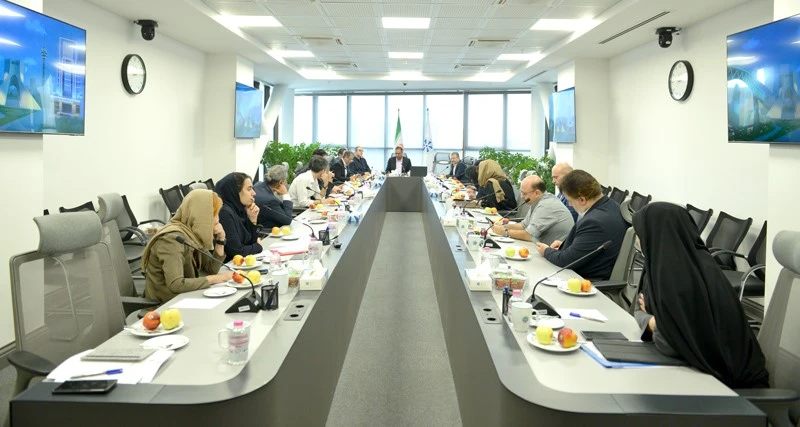
During the 20th meeting of the "Trade Facilitation and Development" Commission at the Tehran Chamber of Commerce, Industries, Mines and Agriculture, the challenges faced by economic actors in the trade sector—along with potential solutions—were examined. At this meeting, attended by representatives of various economic associations, private sector participants discussed the repercussions of rising exchange rates and increased transportation costs, as well as difficulties regarding financing and obstacles to import and export activities.
In their recent meeting, members of the Tehran Chamber’s Commission for Trade Facilitation and Development—while highlighting the challenges faced by the private sector in commercial transactions—called for the streamlining of regulations, the resolution of outstanding foreign currency and rial claims, and the enablement of diverse methods for securing foreign currency.
In this meeting, Mohammad Jafari, Secretary of the Grain Association, pointed to the rise in exchange rates and its impact on the procurement of production inputs, stating: "When the shifts in exchange rates began, the dollar rate in the exchange hall was approximately 112,500 Tomans; however, this figure has now reached about 186,000 Tomans."
According to him, the rise in the exchange rate has increased the cost of goods, placing pressure on both producers and consumers.
Noting that "planning for the supply of livestock inputs has been based on an annual per capita consumption of approximately 33 kg of chicken, 11 kg of meat, 11 kg of eggs, and 110 liters of milk or dairy products," he added that a reduced capacity to provide protein could, in the long term, lead to higher social and health-related costs.
Noting that "the volume of imports for certain inputs has decreased," Jafari stated that corn imports—which stood at approximately 1,026,000 tons during the first six months of last year—have reached 834,000 tons in the same period this year; meanwhile, barley imports have also declined from about 300,000 tons to between 214,000 and 215,000 tons.
Referring to the status of input reserves, he continued: "Currently, the issue is not the availability of stock; rather, rising costs and the losses incurred by importers are also significant factors."
Demands from pharmaceutical distribution companies 300 Effort has arrived.
Mohammad Abdozadeh, Chairman of the Health Economics Commission at the Tehran Chamber of Commerce, pointed to rising costs in the pharmaceutical market, stating: "Last year, the value of the country's pharmaceutical market stood at approximately 360 trillion tomans; this year, due to fluctuations in exchange rates, that figure is projected to reach around 800 trillion tomans. Meanwhile, the combined budget for the 'Darouyar' (pharmaceutical subsidy) scheme and the three major insurance funds falls short of 200 trillion tomans—a deficit that could ultimately impose additional costs on the public."
He added that delays by insurance organizations and the government in settling payments owed to healthcare facilities have created liquidity issues within the pharmaceutical supply chain; specifically, the outstanding receivables owed to distribution companies by these healthcare facilities reached 300 trillion tomans by the end of the month of Shahrivar.
Pointing to challenges in securing foreign currency for medical equipment, Abdeh-Zadeh stated that some companies have imported goods using their own financial resources—calculated at an exchange rate of 28,500 tomans—yet they remain unpaid in foreign currency even after the goods have been sold. Based on assessments, the total amount of outstanding foreign currency owed to these companies is estimated to exceed 500 million euros.
He also identified disruptions in the transport of pharmaceutical raw materials from India as a serious challenge for this sector, stating that the absence of direct flights from India over the past three to four months has made the procurement of certain raw materials for medicines difficult.
Oil Market Affected by Delayed Receivables
Alireza Sharifi, Secretary of the Vegetable Oil Association, commented on the industry's performance, stating: "During the first six months of the year, approximately 1.1 million tons of crude oil were imported into the country—a figure that exceeded initial estimates by 800,000 to 900,000 tons. Annual production is projected at around 1.7 million tons, with a maximum-scenario estimate of 1.8 million tons."
He added that the production volume during the first six months of the year has set a significant record, considering the 73-year history of the vegetable oil industry. Furthermore, the market price of oil is currently 20,000 to 30,000 tomans lower than the officially approved rates in some instances, with the product being offered in stores at a discount.
He further identified the delay in the settlement of foreign currency receivables as the industry's primary concern, stating that if these payments are not made, the continuous supply of goods during the final four to five months of the year—particularly as the month of Ramadan and Nowruz approach—could face difficulties.
Sharifi emphasized that sustainable food security depends on mutual trust between the government and the private sector, as well as the confidence that foreign sellers have in Iranian merchants.
Hamidreza Safar Sharif, head of the Vegetable Oil Association, also pointed out that if the uncertainty regarding outstanding claims persists, some producers and importers could face serious problems over the next three to four months.
Criticizing the gap between the holding of meetings and the implementation of decisions, he added that while issues such as offsetting claims against companies' debts to banks have been raised, no effective action has yet been taken to resolve the status of these claims.
Emergency situations call for a different approach to decision-making.
Subsequently, Seyyed Yousef Ghazi-Asgar, President of the Iranian Biscuit, Confectionery, and Chocolate Union, emphasized that settling outstanding payments—in both foreign and domestic currency—is essential for sustaining the supply chain. He noted that if the financial strength of the private sector erodes, the procurement of raw materials and the continued operation of these industries will face difficulties; this is particularly concerning given that banking, maritime, and logistical restrictions have already impacted trade.
Noting that "decisions cannot be made using standard procedures under emergency conditions," Ghazi-Asgar proposed holding joint meetings attended by the Central Bank, the Trade Promotion Organization, and representatives of the Judiciary.
According to him, the formal recording of decisions and the establishment of necessary exceptions during these meetings can alleviate managers' concerns regarding the consequences of their decisions, while also facilitating a more rapid resolution of the problems faced by economic actors.
The Impact of Car Imports on the Price of Domestic Vehicles
Mostafa Khedri, a board member of the Association of Car Importers, identified the "base exchange rate for customs purposes" and "import tariffs" as key factors influencing vehicle prices. He stated that, given that the prices of imported cars start at approximately 15,000 dollars or euros, the simultaneous application of a 100% tariff and an increase in the base exchange rate would lead to a significant rise in the prices of these vehicles.
Pointing to the import of approximately 170,000 vehicles over the past five years, Khedri stated that the average annual import volume was around 35,000 units, adding that even this level of imports has had a positive impact on the prices of domestically produced and assembled vehicles.
He also emphasized that the foreign currency used for vehicle imports is sourced from deposits and foreign currency resources held abroad, and is not drawn from the funds allocated for medicine and essential goods.
The stalling of goods at the borders has slowed down export turnover.
Continuing the meeting, Mohammad Mehdi Tabatabaei, Secretary-General of the Iran Export Confederation, identified the delay of shipments at borders as one of the most significant challenges facing the export of dried nuts and fruits. He stated that the wait time for trucks at the Bazargan border has reached approximately 25 to 35 days, while delays of around 20 days are reported at the Astara border. Furthermore, some shipments at Bandar Abbas remain held up for more than 20 days.
Tabatabaei added that approximately 5,000 containers of export goods—including dried nuts and fruits—have been stockpiled at the Aprin terminal. This situation has slowed down the transport cycle and the cash flow of exporters.
Increase in transport costs for export products
Sadroddin Niavarani, Vice Chairman of the Non-Oil Export Development Commission at the Iran Chamber of Commerce, also spoke of reduced access for exporters to regional and European markets, adding that approximately 80 percent of the market in the southern Persian Gulf states—previously a key destination for Iranian agricultural products—has been lost.
He added that exports from Bandar Lengeh to Arab countries are continuing, with approximately 100 to 150 containers of goods being shipped via this route daily; however, shipping costs have risen significantly—freight charges that were previously around 4,000 dirhams have now reached 16,000 to 20,000 dirhams.
Pointing to the decline in the competitiveness of Iranian products, he stated that rising costs have made it more difficult for certain goods—such as kiwis—to compete in markets like the UAE against rivals such as New Zealand. Exports of pomegranates and sweet limes to Europe have also decreased due to price increases and competition from countries like Egypt.
The necessity of facilitating the import of raw materials and production equipment
Mehrad Ebad, a member of the Tehran Chamber’s Board of Representatives, emphasized the importance of securing raw materials and equipment required for production, stating that a reduction in the import of these items could bring factory operations to a halt; therefore, the definition of "essential goods" should not be limited solely to food and medicine.
Pointing to the evolution of the mechanism’s designation—from "non-transfer of foreign currency" to "private foreign currency" and subsequently to "foreign currency deposit"—he added that this method should be made available for a broader range of raw materials and equipment required by manufacturers and traders.
Ebad also called for a revision of the list of goods eligible for import via facilitated channels, as well as the establishment of clear regulations for order registration. He stated that access to order registration and foreign exchange resources should not depend on the bargaining power or influence of certain organizations; rather, transparent and uniform criteria must be applied to all economic actors.
Signs of a decline in textile and apparel industry activity
Amin Moghadam, a member of the Tehran Chamber’s Board of Representatives, pointed to the significant employment generated by the textile and apparel industry, noting that the sector is currently grappling with challenges related to exports and the procurement of raw materials; he added that the continuation of import restrictions could negatively impact employment within these industries.
He went on to provide a report on the clothing and textile exhibitions held in late October, stating that the number of active halls had dropped from around 11 or 12 in previous years to just four—a trend that could be a cause for concern among industry stakeholders.
The Importance of Trade Facilitation and the Removal of Currency Restrictions
Continuing the session, Mohammad Reza Ghafrallahi, Chairman of the Trade Facilitation and Development Commission at the Tehran Chamber of Commerce, summarized the points raised, stating that the private sector is striving to preserve jobs, meet the public's needs, and prevent disruptions in the supply of goods; however, existing constraints have made operations difficult for traders and producers.
Emphasizing the need to create more openness for economic activity, he added that economic actors should be able to utilize various methods for securing foreign currency—including the use of private foreign exchange holdings and imports without the transfer of currency.
In conclusion, Ghafarollahi called for a review of the restrictions and the adoption of a facilitative approach, stating that the views expressed during the meeting would be summarized and conveyed to the relevant authorities.